Choosing Strength Training Exercises: the Essential Movements to Build an Effective Workout
Discover the main strength training exercises and which muscles they work.
What Is a Strength Training Exercise?
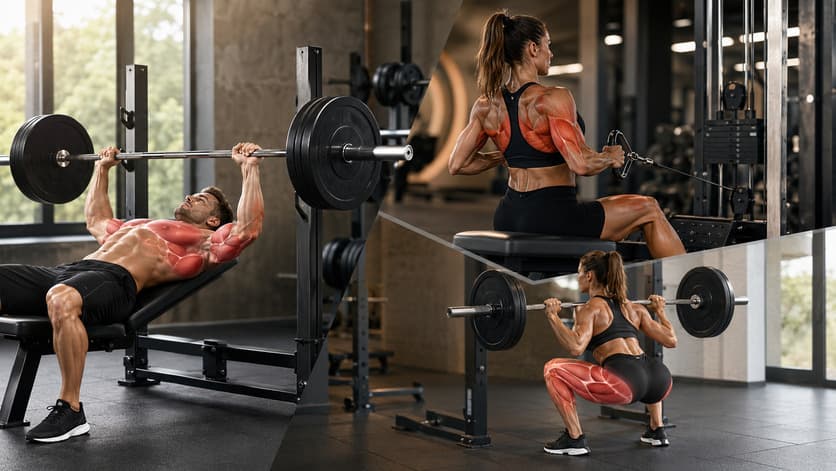
A strength training exercise is a repeated movement done with the goal of developing strength, muscle mass, control, or stability. Some exercises are very global and involve several joints and several muscle groups at the same time, while others are more targeted and are used to focus the work on one specific area. This explains the difference between basic exercises, often called compound exercises, and isolation exercises.
A squat, a bench press, or a row involves several muscles at the same time. On the other hand, a biceps curl, a lateral raise, or a leg extension targets one area more specifically. Both categories have their place, but they do not play the same role in a workout.
Strength training exercises also differ by the equipment used. Some are done with a barbell, others with dumbbells, on a machine, with a cable, or simply with body weight. The choice of equipment changes the feeling, stability, and sometimes the difficulty, but the logic of the movement often remains the same.
Why Choosing the Right Exercises Is Important
Choosing exercises at random rarely leads to solid training and good results. Many lifters pile up variations that are very close to each other, think they are changing the work while they are almost repeating the same movement, or completely forget certain muscle groups. On the other hand, a good exercise selection helps build more coherent and more effective workouts.
Choosing your exercises well first means understanding what you want to work. A pushing movement does not serve the same purpose as a pulling movement, while a stable machine exercise does not require the same control as a free-weight exercise with dumbbells or a barbell. A beginner does not necessarily need complex movements, while a more advanced lifter will often look to vary angles and tools more.
This selection also has a practical benefit. A few well-chosen exercises are often enough to build a complete workout. This avoids making training unnecessarily long and allows you to focus effort on the movements that provide the most while minimizing fatigue and therefore improving recovery, which is essential for muscle development.
The Main Families of Strength Training Exercises
Strength training exercises can be classified in several ways, but the most useful one for an introductory article remains the major movement families.
Pushing Exercises
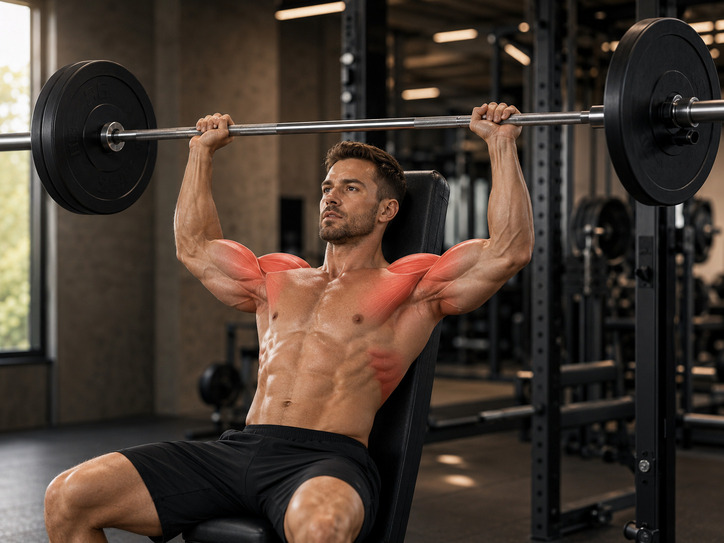
Pushing exercises, commonly called "push" exercises, include movements where you push a load in front of you or overhead. They mainly involve the chest, shoulders, and triceps. The bench press is the best-known example. It can be completed with the incline bench press, push-ups, dips, or the overhead press for the shoulders.
This family is important because it structures a large part of upper-body workouts and also helps explain why certain muscles work together. When you push, the triceps and shoulders often work with the chest. This is why these areas are frequently grouped together in programs.
Pulling Exercises
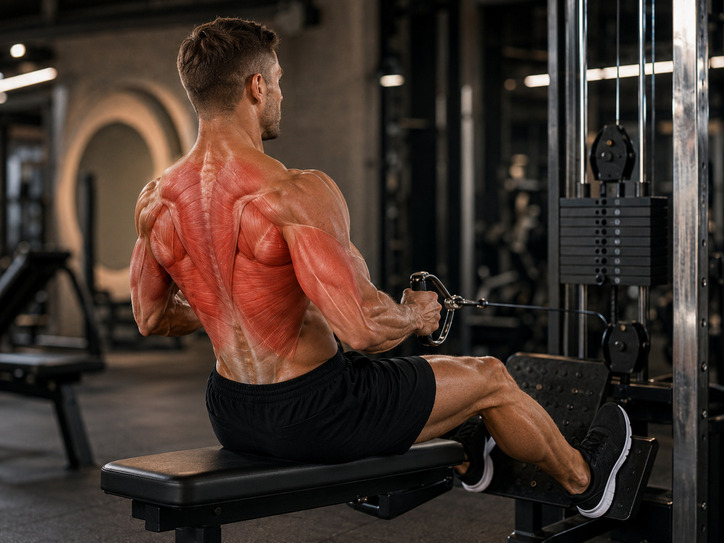
Pulling exercises, commonly called "pull" exercises, include movements where you bring a load toward you or downward. They mainly work the back, with significant involvement from the biceps and forearms. Pull-ups, lat pulldowns, barbell rows, dumbbell rows, and seated cable rows are part of this family.
These exercises are essential for building the back, but also for the overall balance of the upper body. Training centered only on pushing movements often ends up incomplete. Pulling exercises provide real work for posture, control, and upper-body stability.
Leg Exercises
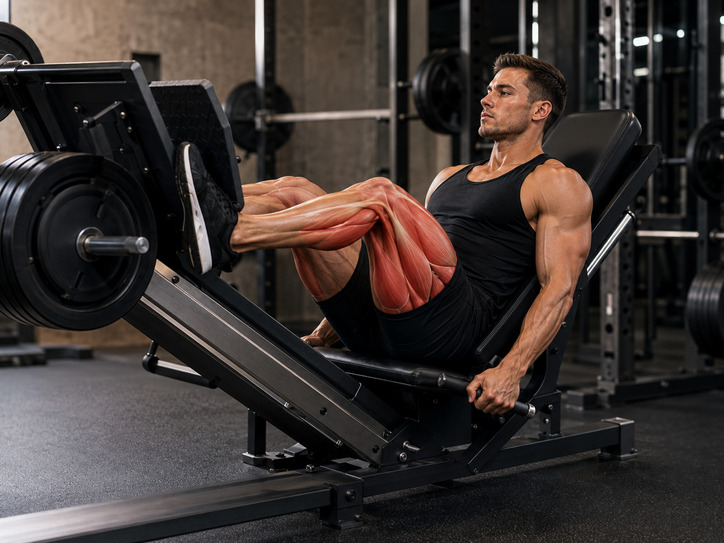
Leg exercises, commonly called "leg" exercises, include several logics. Some emphasize the quads more, such as the squat, leg press, hack squat, or forward lunges. Others target the posterior chain more, such as the Romanian deadlift, leg curl, or certain lunge variations.
The lower body should not be seen as one single uniform area. Leg exercises work the quads, hamstrings, glutes, and calves depending on the variations chosen. This is why a balanced leg workout is not limited to a single movement.
Glute Exercises
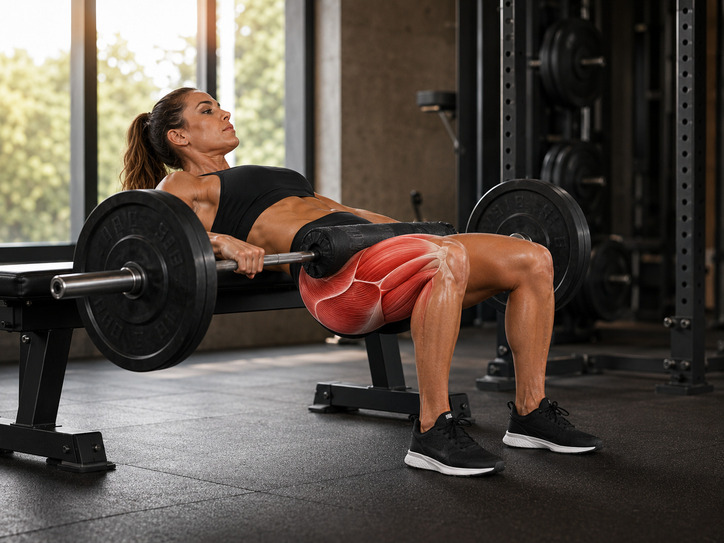
Even though they are often trained in leg workouts, the glutes can also be seen as a full family of their own because their role is so important. They are involved in the squat, lunges, Romanian deadlift, and especially in highly targeted exercises such as the hip thrust, glute bridge, or certain cable hip extensions.
Glute exercises are taking an increasingly important place in programs, not only for aesthetics, but also for pelvic stability, lower-body power, and the overall balance of movements.
Shoulder Exercises
The shoulders can be trained both in pushing movements and in more targeted exercises. The shoulder press or overhead press serves as a base and works the front part, while lateral raises, reverse flyes, and certain dumbbell or cable variations allow more localized work for the middle and rear parts.
This exercise family is useful because the shoulders are involved in many upper-body movements. They therefore require smart organization to avoid accumulating too much fatigue with exercises that look similar without realizing it. Also note that some exercises for the anterior deltoids, meaning the front of the shoulders, will also work the chest.
Arm Exercises
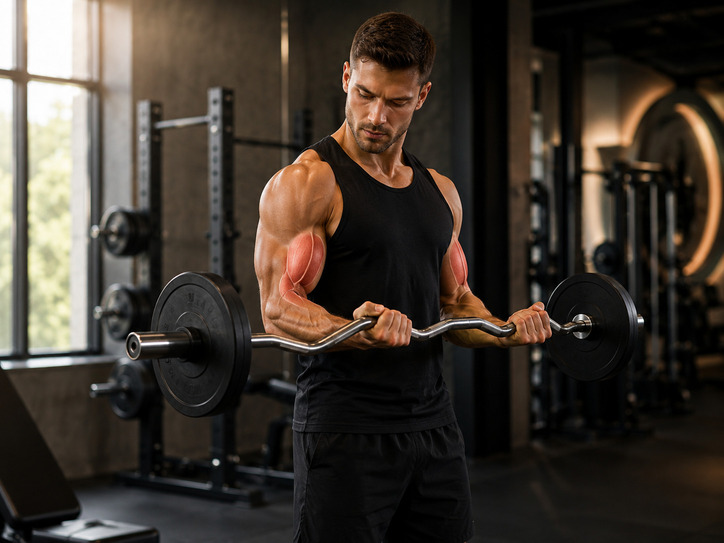
Arm exercises mainly concern the biceps and triceps. For the biceps, you find curls with a barbell, dumbbells, or a cable, as well as hammer curls. For the triceps, cable extensions, skull crushers, or certain overhead variations are the most common.
These exercises have real value, but they usually come after basic movements. At the start of a program, they mainly serve to complete the work already done on pulling and pushing movements. These two antagonist muscles can be trained in a superset, which consists of pairing a biceps exercise with a triceps exercise.
Ab Exercises
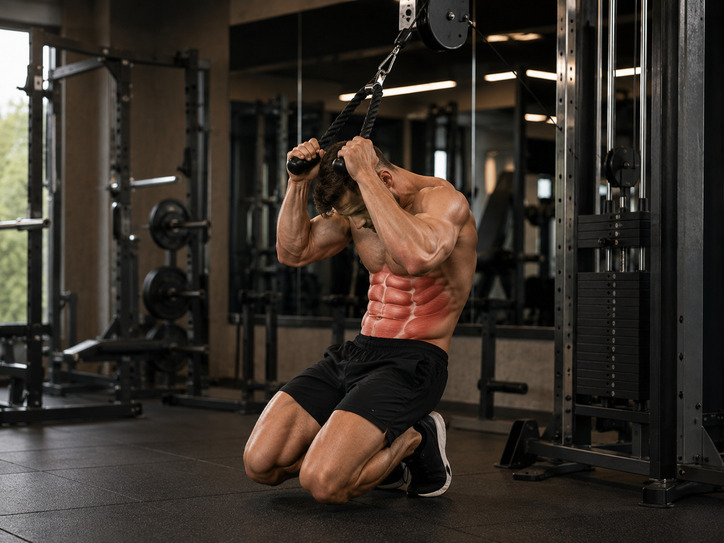
Ab exercises include planks, trunk curl-up movements, leg raises, and other more dynamic variations. The plank remains one of the easiest to include, but there is also the crunch, cable crunch, ab wheel, or certain hanging variations.
Their role is not limited to aesthetics. The abs help maintain the trunk and provide stability on many basic exercises. This explains why they can be trained directly while already being indirectly involved in a large part of training.
Compound Exercises and Isolation Exercises
The distinction between compound exercises and isolation exercises is one of the most useful when you start strength training. A compound exercise involves several joints and several muscle groups. The squat, bench press, pull-ups, rows, or deadlift are part of this category. These movements often form the base of a program because they allow you to train heavy, recruit a lot of muscle mass, and build a workout around simple reference points.
Isolation exercises target a specific area more directly. The biceps curl, lateral raise, leg extension, leg curl, or cable triceps extension are used to complete the work. They are useful for balancing a workout, emphasizing an area, or adding volume to a specific muscle.
You should not oppose these two families. The right logic is rather to understand their order of importance. Compound exercises provide the overall structure and should therefore be prioritized when you start strength training, while isolation exercises come in to refine, complete, or correct.
Basic Exercises to Know When You Start
When you start, you do not need to know fifty exercises. A few movements are enough to build a clean base. For the lower body, the squat or a stable leg press already gives a good starting point. For the upper body, a bench press or a dumbbell variation, a horizontal pull, a vertical pull, and a shoulder press cover the essentials. Once these basics are well executed and progress has started, it is interesting to test other movements, but to begin, this base is already very complete.
It is also useful to learn a simple hip hinge movement, such as a light Romanian deadlift or a guided variation, as well as a plank exercise. With this, a beginner already has a coherent base to understand how the major strength training movements work.
The most important thing at the beginning is not to have the largest possible exercise catalog. It is to learn to execute a few exercises well, understand what they work, and progress on them without changing every week.
Which Exercises to Choose by Muscle Group
Upper-Body Exercises
For the Chest
The best-known exercises for the chest are the bench press, incline bench press, push-ups, forward-leaning dips, and flyes with dumbbells or cables. The first ones serve as a base, while the second ones often complete the work with a different angle or more targeted tension.
For the Back
The back is mainly trained with pull-ups, lat pulldowns, rows, and horizontal cable rows. These exercises make it possible to use different angles while keeping a simple logic: pulling a load while controlling the path and the position of the upper body.
For the Shoulders
For the shoulders, you find the shoulder press, lateral raises, reverse flyes, and certain cable variations. The press builds the base, while the other exercises help complete the work with more precision.
Arm Exercises
For the Biceps
The biceps are mainly trained with curls. Barbell curls, dumbbell curls, incline curls, hammer curls, and cable variations make it possible to slightly vary the feeling, but the logic always remains the same: elbow flexion.
For the Triceps
The triceps are trained with cable extensions, skull crushers, overhead extensions, and certain dip variations. As with the biceps, these movements often complete the work already done on pushing exercises.
Lower-Body Exercises
For the Quads
The quads are heavily used on the squat, leg press, hack squat, lunges, and leg extension. These exercises take a central place in leg workouts when the goal is to develop the front of the thigh.
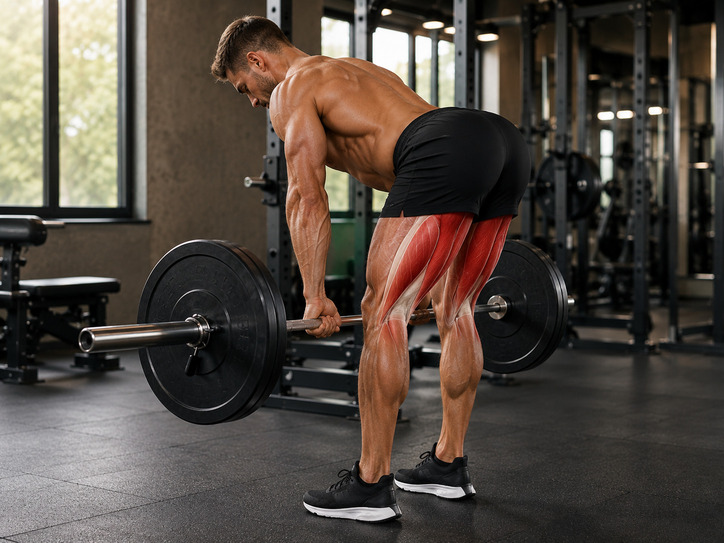
For the Hamstrings
The hamstrings are mainly involved in the leg curl, Romanian deadlift, and certain hip hinge variations. They are essential for balancing lower-body work.
For the Glutes
The glutes work on the hip thrust, lunges, squat, Romanian deadlift, and certain hip extensions. They are taking more and more space in modern programs because they have a central role in the lower body.
For the Calves
The calves are mainly trained with standing or seated calf raises, often at the end of a leg workout. These exercises are simpler in principle, but they keep their place in complete training.
Exercises for the Abs
The abs can be worked with planks, crunches, leg raises, cable crunches, or the ab wheel. The choice depends on the level and the ability to control the trunk well.
Exercises by Goal
To Build Muscle
For hypertrophy, basic exercises generally take first place. They allow you to train several muscle groups heavily and create solid training volume. Isolation exercises then complete the workout on certain areas. Medium sets between 8 and 12 reps with heavy weights are usually preferred.
To Build Strength
In a strength-focused approach, the emphasis is often placed on the most stable and progressive movements, such as the squat, bench press, row, or certain pulling and pushing variations. The priority is then less about variety and more about progressing on a few clear reference points. Here, shorter sets with a focus on weight are preferred.
For Getting Back in Shape
In a more general setting, it is often better to choose exercises that are simple, stable, and easy to understand. Machines, dumbbells on guided movements, and well-mastered bodyweight exercises often allow you to start more calmly.
For a Cut
During a cut, strength training exercises keep the same basic role: maintaining muscle mass and keeping a good level of stimulation. The logic is not to look for exercises that “burn fat” locally, because fat loss cannot be chosen muscle by muscle. You therefore keep a classic and coherent base. The key in this case is the diet with dietary supplements in strenght traning, the exercises remain the same while adapting weights and intensity to energy, which is often lower in a calorie deficit.
Exercises With and Without Equipment
Strength training exercises can be done with several tools. Dumbbells often provide more freedom of movement and good coordination work. The barbell allows heavier loads and more stable reference points. Machines offer more guidance and often reassure beginners. They also allow better isolation of a muscle with better stability. Cables allow smooth paths and interesting angles with continuous tension. Bodyweight exercises, such as push-ups, pull-ups, or dips, also keep real value.
No tool is perfect in every case. The most useful thing is to understand what each tool allows. A machine can be very practical for learning or targeting a muscle without worrying too much about balance. A free-weight exercise often requires more control, while body weight can be very effective, as long as it is adapted to the lifter’s real level.
How to Build a Strength Training Workout With the Right Exercises
A well-built workout does not need to be complicated. In most cases, you can start with one or two basic exercises, the ones that require the most energy, focus, or load. Then come a few complementary exercises to continue the main work from another angle. Finally, one or more more targeted exercises can finish the workout on a specific area.
For example, an upper-body workout can be organized around a press, a pull, then a few movements for the shoulders and arms. A leg workout can start with a squat or a press, add a movement for the posterior chain, then finish with one or two more targeted exercises.
The idea is not to stack as many exercises as possible, but to keep a logic. When several movements overlap too much, they do not necessarily add much more. In addition, fatigue increases, which hurts recovery and therefore progress. It is better to do less and do it better than the opposite.
Common Mistakes When Choosing Exercises
One of the most common mistakes is changing exercises too often. Many lifters see a new variation on social media and immediately want to replace it in their next workout. The problem is that an exercise also needs to be practiced regularly to be understood and improved.
Another mistake is multiplying very similar exercises, meaning doing several almost identical variations in the same workout. This often gives the impression of working better, while it mainly ends up blurring progress and over-fatiguing a muscle. On the other hand, neglecting the legs, back, or basic movements also remains a classic mistake among beginners.
You should also avoid choosing an exercise only because it is popular, impressive, or spectacular. A good exercise is not the one that gets the most attention. It is the one that makes sense in the workout, for the lifter’s level, and for the goal being pursued. Finally, sensation is important but is not necessarily a good indicator. Only measuring progress will tell you whether what you are doing works.
What to Remember About Strength Training Exercises
Strength training exercises may seem very numerous, but they are actually organized around a few simple major families: pushing, pulling, training the legs, training the core, and completing certain areas with more targeted movements. This logic already helps you better understand a program and choose your workouts better.
Instead of immediately looking for dozens of variations, it is better to master a few basic exercises, understand their role, and learn to combine them intelligently and execute them correctly. This base then makes it possible to move toward more detailed articles on each movement, each muscle group, or each training method.
FAQ
What Are the Best Strength Training Exercises?
There is not one single best exercise that works for everyone. However, certain movements come up very often as a solid base, especially the squat, bench press, row, pulldowns, lunges, shoulder press, and certain plank exercises.
What Exercises Should You Do When You Start Strength Training?
When you start, the most useful thing is to focus on a few simple and structuring exercises: a pushing movement, a pulling movement, a leg exercise, a hip hinge exercise, and a plank exercise. This is already enough to build a coherent base.
Should You Prioritize Machines or Free Weights?
Both have value. Machines are often easier to learn and more stable, with better muscle isolation. Free weights require more control, offer a different training feel, and are more compound. The right choice depends on level, technical comfort, and the context of the workout.
What Is the Difference Between a Basic Exercise and an Isolation Exercise?
A basic exercise involves several joints and several muscle groups, such as the squat or bench press. An isolation exercise targets a specific area more directly, such as a biceps curl or a lateral raise.
How Many Exercises Should You Do per Workout?
There is no universal number, but a workout does not need to be very long to be effective. A few well-chosen exercises, organized in the right order and executed well, are often more than enough to make good progress.
Which Exercises Help Build Muscle?
To build muscle, basic exercises keep a central place, completed by more targeted exercises depending on the areas to develop. The coherence of the whole matters more than constantly looking for new variations.
Can You Do Good Strength Training Exercises at Home?
Yes, as long as you adapt the exercises to the equipment available. Push-ups, pull-ups, lunges, certain movements with dumbbells or bands, as well as planks, can already allow you to build very decent workouts at home.
Related articles
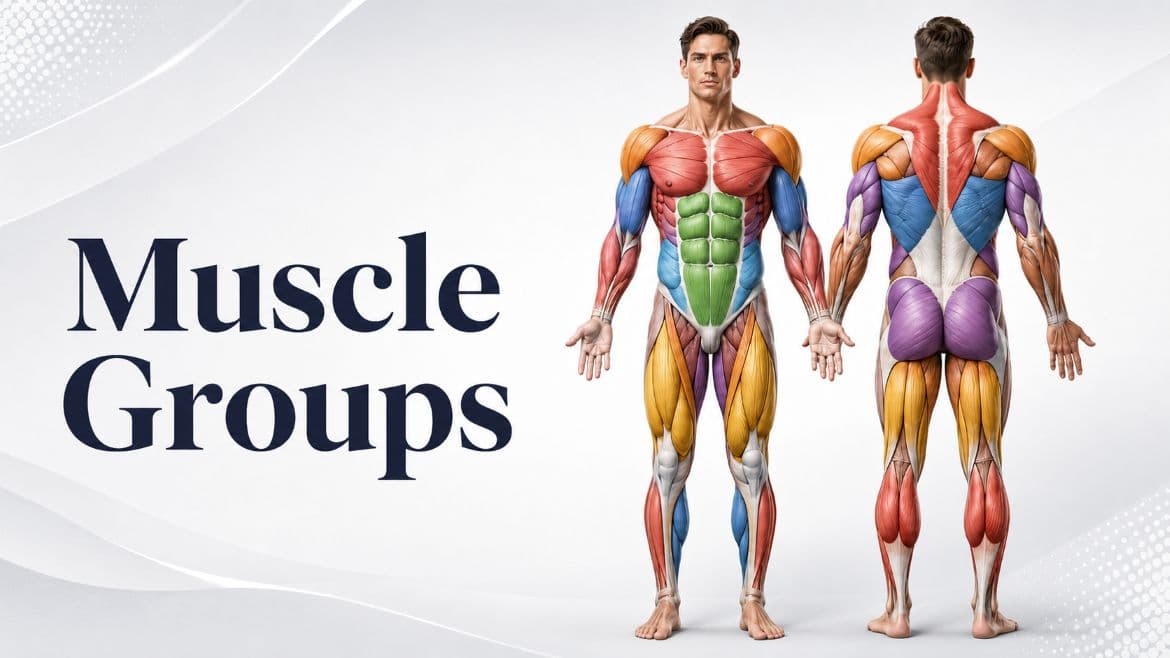
Muscle Groups: Understanding the Main Muscles of the Body to Train Better
A guide to understand the basics of the topic and organize your training more effectively.

Dietary Supplements in Strength Training: Which Ones Exist, What Are They For, and How Should You Use Them?
Dietary supplements occupy an important place in the world of strength training, but they are often presented in an overly simplistic way, even though their real value depends on the product, the goal, and how they fit into training and nutrition. Between useful products, thos