Dietary Supplements in Strength Training: Which Ones Exist, What Are They For, and How Should You Use Them?
Discover the main dietary supplements used in strength training, their role, their value, and how to use them according to your goal.
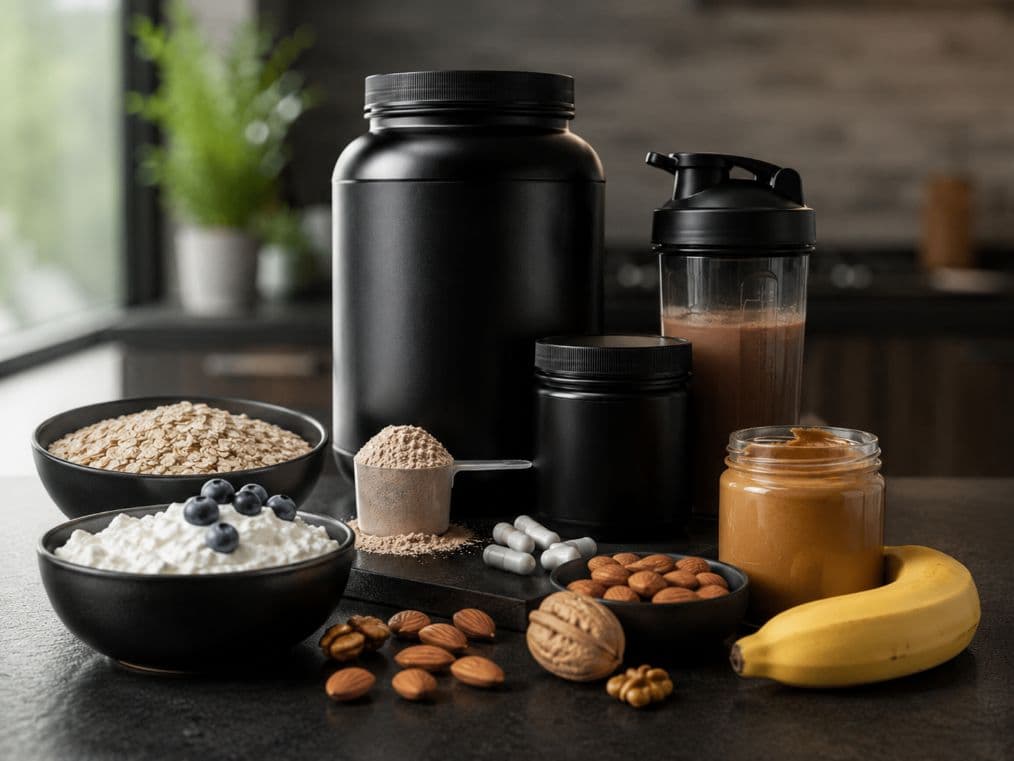
In a strength training context, whether the goal is muscle gain or fat loss, a dietary supplement is a product added to the usual diet to complete an intake, make it easier to consume certain nutrients or, in some cases, try to improve a training-related capacity. The NIH lists protein, creatine, caffeine, and several amino acids among the common ingredients in supplements for exercise and performance.
This does not mean that all supplements have the same value or that they all have the same usefulness depending on the lifter. Some are mainly used to make daily nutrition simpler, others aim to directly improve certain aspects of performance, and others are still very present on the market despite having a more limited or less consistent value.
In practice, you can distinguish three main categories. First, convenience supplements, like whey, which mainly help you reach a sufficient protein intake more easily. Then, supplements with documented ergogenic value, such as creatine or caffeine, which can improve certain performance variables in specific contexts. Finally, there are products that sell very well but have weaker, less consistent, or less well-demonstrated value, such as many fat burners, BCAAs taken alone, or certain hormone boosters sold with big promises.
This distinction is important because it avoids putting all supplements in the same category. In practice, a supplement can be useful, secondary, or almost useless depending on the product, the lifter’s level, the goal, and the quality of the diet already in place.
Before Supplements: What Really Drives Progress in Strength Training
Before even talking about tubs and capsules, progress in strength training mainly depends on four levers: training, overall energy intake, total protein intake, and recovery. Supplements can help around this base, but they do not compensate for a poorly built program or an insufficient diet. This is a constant idea in reference reviews on sports nutrition.
For hypertrophy and bulking, the central point remains to provide the body with a sufficient training stimulus and then a nutritional context compatible with muscle adaptation. For a cut, the logic changes: you need to preserve muscle mass despite an energy restriction, which makes protein intake even more strategic. Supplements can then serve as a tool, not a foundation.
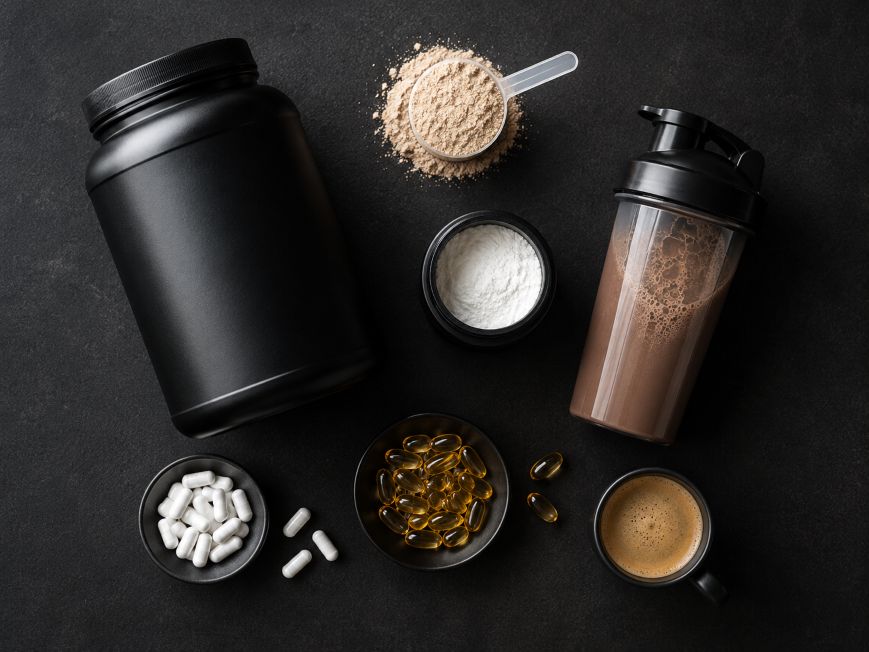
The Main Dietary Supplements in Strength Training
Protein Powders
Protein powders, such as whey, casein, or certain plant-based proteins, are among the most commonly used supplements. Their role is not to “build” muscle on their own, but to help reach daily protein intake more easily, which is necessary for maintaining and developing muscle mass. The NIH (National Institutes of Health) states that protein is needed to build, maintain, and repair muscle, and that exercise then increases muscle protein synthesis for several hours, or even more than a day.
In a strength training setting, their value is therefore mainly practical. Whey is useful if it makes it easy to add a serving of protein after training or during the day. Casein can be chosen for its slower digestion, while plant-based proteins can also work, but the quality of the amino acid profile and total daily intake matter a lot. The ISSN gives a general reference range of 20 to 40 g of high-quality protein per serving, depending on body weight and activity, spread every 3 to 4 hours throughout the day.
Creatine
Creatine is the strongest supplement from a scientific standpoint in strength training. It is described as one of the most studied and most widely used supplements for improving sports performance. Its main role is linked to rapid ATP production, therefore to short-duration intense effort, which explains its value for strength, reps, and training volume.
A meta-analysis published in 2024 concluded that creatine supplementation combined with resistance training improves upper- and lower-body strength in adults under 50, with greater benefits when the intervention lasts more than 8 weeks. A 2023 meta-analysis had already found a small additional gain in hypertrophy when it is combined with training.
The best-documented form remains creatine monohydrate, and the ISSN states that it is effective, widely studied, and generally well tolerated in healthy individuals under usual protocols.
Mass Gainer
A mass gainer is mainly used to increase calorie and protein intake more easily during a bulking phase. It can be useful for lifters who struggle to eat enough or meet their needs throughout the day. However, it is not an essential supplement or a product that builds muscle by itself. Its value mainly depends on whether the diet already covers energy and protein needs or not.
Supplements Often Used in Pre-Workout
Among the supplements most often used before training, you mainly find caffeine, citrulline, beta-alanine, and, more secondarily, arginine. All of them are regularly found in pre-workout formulas, but they do not have the same role, the same level of evidence, or the same usefulness depending on the lifter.
Caffeine
Caffeine is another supplement that can have real value, especially before training. It acts in particular on the central nervous system, increases alertness, reduces perceived fatigue, and can decrease perceived exertion.
In a strength training context, its value is mainly tied to the workout itself: better mental readiness, the ability to push a little harder, sometimes more reps or better work quality. An umbrella meta-analysis published in 2024 found a significant effect of caffeine on muscular strength and muscular endurance, even though the individual response varies clearly from one person to another.
However, caffeine is not neutral. Tolerance varies a lot, and taking it late can interfere with sleep, which can then hurt recovery and progress. It is therefore a useful supplement, but one that should be managed according to timing, individual sensitivity, and the dose actually tolerated.
Beta-Alanine
Beta-alanine is a more specific supplement and is often associated with pre-workout. It increases muscle carnosine content, which helps buffer muscle acidity during intense efforts. The data are more oriented toward benefits on high-intensity efforts, especially when they last from a few dozen seconds to several minutes.
For pure strength training, it can be useful, but its value is less direct and less consistent than creatine’s. A systematic review and meta-analysis published in 2024 concluded that it has a positive effect on maximal intensive exercise performance, but that does not mean beta-alanine is a central product for muscle gain for every lifter. The NIH is also more nuanced and notes that there is not complete consensus on its general practical value in strength training.
Citrulline
Citrulline, often sold as citrulline malate, is mainly marketed as a pre-workout ingredient. Its theoretical value is based in particular on increasing arginine availability and then nitric oxide, with the idea of improving blood flow and sometimes work capacity. The NIH mentions citrulline among the ingredients used for performance, but also points out that results remain variable depending on protocols, doses, and formulations.
At this stage, citrulline may have potential value before certain workouts, but the level of evidence is more mixed than for creatine or caffeine. It is typically a context-dependent supplement often paired with other supplements, but not an essential foundation.
Arginine
Arginine is sometimes added to pre-workouts for its role as a nitric oxide precursor. On paper, it can therefore be associated with better vasodilation and better blood flow during exercise.
In practice, its value appears more uncertain. Results remain mixed depending on studies, doses, and contexts, and its level of evidence is less convincing than caffeine’s. In a general article, it is therefore better to present it as an ingredient sometimes used before training, but secondary compared with the most documented supplements.
BCAAs
BCAAs are very well known, but their real value is often overestimated. The studies conducted are inconsistent, and it is not clearly demonstrated that they stimulate protein synthesis beyond what a sufficient intake of good-quality complete proteins can already do. It also notes that whey and other complete proteins naturally provide BCAAs, with a more interesting overall profile.
In other words, for someone who already reaches their protein intake through food or a complete protein, BCAAs alone are generally not a priority and are often dispensable. Even in cases where protein intake is insufficient, it is generally more relevant to increase complete proteins than to add only BCAAs.
Supplements According to the Goal
For Hypertrophy
In a hypertrophy-focused approach, the most interesting supplements are first those that support training and protein intake. Creatine has a real place here because it can help maintain a high performance level across sets and gradually increase training volume. Protein powders like whey are useful if they help cover daily intake that is not reached through food.
Caffeine can also be useful before certain heavy or high-volume workouts, but it does not play the same role: it mainly improves the immediate quality of the workout, not hypertrophy directly.
For Bulking
During a bulk, the priority remains a controlled calorie surplus. Supplements can mainly help make this goal more practical and less restrictive. Whey can make it easier to increase protein, and a mass gainer can sometimes help someone who struggles to eat enough. But a mass gainer is not magic: it is often mainly a calorie-dense product, sometimes very high in sugar, and it is not automatically better than a well-built solid-food diet.
Creatine remains clearly useful here, because bulking is often accompanied by strength work and high training volume, two contexts in which it can be particularly useful.
For Cutting and Fat Loss
During a cut, the most useful dietary supplements are not necessarily the ones most visible in marketing. The most important thing is often to keep protein intake high enough to help preserve muscle mass despite the calorie reduction needed for fat loss. In this context, protein powders can be useful if they make it easier to hit protein intake throughout the day.
Caffeine can also have value during a cut, especially when energy levels drop and workouts become harder to maintain with the same intensity. It can help you stay more focused and keep better training quality.
However, fat burners are much more questionable. Their effectiveness is often less convincing, and many products in this category rely mainly on marketing, with formulas that are sometimes unclear or unnecessarily aggressive.
For Recovery
Many supplements are sold in the name of recovery, but it is important to stay measured. After training, protein intake can be useful if the next meal is not coming soon or if daily intake is insufficient. Creatine can also help tolerate high training loads over time. But again, the foundations remain sleep, total energy intake, hydration, and the overall organization of the training week.
When Should You Take Supplements?
Protein
For protein, the main idea is not to obsess over a precise minute, but to cover total daily intake with a coherent distribution. In practice, 20 to 40 g servings of high-quality protein, distributed regularly throughout the day, are recommended. A serving close to training can be useful, before or after, but it is not the only thing that matters.
Creatine
For creatine, the exact timing seems less important than regular intake. In practice, many protocols use consistent daily intake. The strongest point to remember is therefore consistency rather than trying to find a “perfect” timing.
Caffeine
Caffeine is logically taken before training, since its value is tied to the workout itself. However, its use depends a lot on the time of the workout and individual sensitivity. Someone who trains late in the evening does not necessarily benefit from chasing a small boost in the workout if it then worsens sleep and therefore recovery.
Beta-Alanine
Beta-alanine does not work like a “quick kick” stimulant taken right before training. Its value depends more on repeated supplementation that gradually increases muscle carnosine, and the studied protocols generally last several weeks.
What Recent Studies Say
Recent data mainly confirm an already well-known hierarchy, with creatine remaining one of the best-supported supplements, with recent meta-analyses showing a benefit on strength and, to a lesser extent, on lean mass gains when it is combined with resistance training.
Caffeine also continues to have an interesting level of evidence for muscular performance, with a 2024 synthesis showing a positive effect on strength and muscular endurance.
For beta-alanine, recent work supports more of a benefit for specific intense efforts, but not enough to make it an essential supplement for every strength training lifter.
For protein, the message from reference position stands remains stable: the main value is reaching a sufficient daily intake with good-quality proteins, so the benefits of a powder depend a lot on the overall dietary context.
Other Dietary Supplements
In this article, we mainly focused on the best-known supplements that are most directly related to strength training, such as protein powders, creatine, caffeine, citrulline, and mass gainers. This does not mean that other supplements do not exist or never have value.
There are also many other products, such as omega-3s, vitamin D, magnesium, certain multivitamins, glutamine, electrolytes, and other amino acids. Their value often depends more on the general context, the diet, a possible deficiency, or a specific need than on a direct effect on muscle gain or gym performance.
In other words, not all supplements are equal and they do not have the same role. Some can be useful in specific cases, but in a purely strength training logic, the products covered in this article are generally the most important ones to know first.
How to Choose a Supplement Without Getting Fooled
The main point is to look at the product category, a simple whey does not follow the same logic as a multi-ingredient pre-workout. The more complex the formula, the harder it becomes to know what is actually working and at what dose. Many multi-ingredient products have not been tested as complete combinations, and proprietary blends sometimes hide the exact amounts. It is therefore recommended to use simple products, test combinations, and observe results before adjusting afterward.
Common Mistakes With Dietary Supplements
The first mistake is buying supplements before fixing the basic diet. Whey is not very useful if overall protein intake is already covered, and a pre-workout does not compensate for nights that are too short or an incoherent program.
The second mistake is believing that a product that is very visible on social media is automatically useful. In reality, the strongest supplements are often the simplest: protein depending on need, creatine, and caffeine depending on context. Conversely, many heavily promoted products rely on weak, indirect, or unstable evidence.
The third mistake is multiplying products without any logic. A beginner strength training lifter generally does not need five different supplements. Information on this subject should precisely help prioritize and evolve over time based on personal results, without following trends and ads.
What to Remember
Beta-alanine and citrulline can come later in more targeted cases, but they are not priorities for everyone. As for BCAAs alone, fat burners, and hormone boosters, they are rarely the best place to invest at the start.
Dietary supplements can have a real place in strength training, but only when they are kept at the right level. They are used either to complete an intake, make nutrition organization easier, or slightly improve certain performance variables in well-defined contexts. The products that stand out most clearly are creatine, protein when it meets a real need, and caffeine before certain workouts.
For hypertrophy, bulking, cutting, or recovery, the right question is therefore not “which supplement is magic?”, but “which product can be useful in my specific context, without making me lose sight of the essentials?”. This logic is what makes it possible to sort between truly useful supplements, products that are only practical, and those that are mostly marketing.
FAQ
What Is the Best Dietary Supplement for Building Muscle?
If you have to rank them, creatine monohydrate is the best-supported supplement to pair with resistance training, while protein powders are mainly useful for reaching total protein intake.
Do You Need to Take Whey to Progress in Strength Training?
No, not necessarily. Whey is mainly useful if it helps you reach your protein target more easily. If your diet already covers that intake, it is not essential.
When Should You Take Creatine?
The most important thing is regular intake, not trying to find a perfect time. The strongest data mainly support consistent supplementation.
Are BCAAs Useful in Strength Training?
Taken alone, they are generally not a priority when the diet already provides enough good-quality complete proteins.
Which Supplement Should You Take Before Training?
Caffeine is the most documented choice for improving alertness, reducing perceived fatigue, and supporting performance in certain workouts. Citrulline and beta-alanine also exist, but their value is more context-dependent.
Related articles
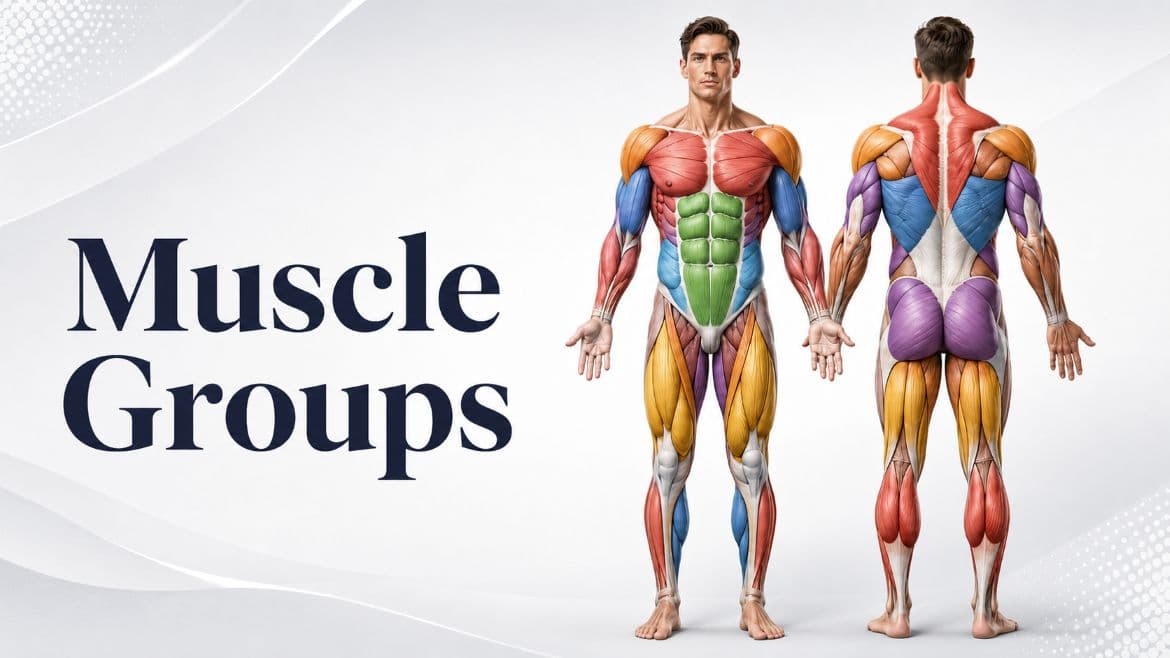
Muscle Groups: Understanding the Main Muscles of the Body to Train Better
A guide to understand the basics of the topic and organize your training more effectively.